

Table of Contents
Last updated: October 2026 | Reading time: 8 minutes | Reviewed by Abdullah Bin Hussain, Executive Director, Ontime Manpower Supply
Short Answer
If your company has no UAE trade licence, you need an Employer of Record (EOR). If you already have a licensed UAE entity and just want HR, payroll and compliance off your plate, a Professional Employer Organisation (PEO) is the better fit. The legal structure decides it, not the size of your team.
Quick Facts
- EOR: the EOR is the legal employer. No UAE entity needed on your side.
- PEO: co-employment. You must already hold a UAE trade licence.
- Salary deadline (since 1 June 2026): wages are due by the 1st of the following month under WPS.
- Gratuity: 21 days of basic pay per year for the first 5 years, 30 days after that. Capped at 2 years’ wage.
- Visa cost per hire: roughly AED 5,000 to 10,000 depending on route (mainland vs free zone) and what’s included.
- Both models operate under Federal Decree-Law No. 33 of 2021 and MOHRE rules.
Hiring in Dubai looks simple until the paperwork starts. Work permits. Visa sponsorship. WPS salary files. End-of-service gratuity. And since 1 June 2026, a much stricter salary deadline.
Pick the wrong model and you either wait weeks for an entity you didn’t need, or pay for a service that can’t legally employ your people. This guide shows the real differences, what each model costs you in practice, and a quick flow to make the call.
What Are PEO and EOR Services in the UAE?
Both are outsourced employment models. Both take payroll, contracts and compliance off your desk. The difference is who is the employer on paper.
Employer of Record (EOR) is a licensed UAE company that becomes the legal employer of your staff. Contracts, visas, WPS payroll and gratuity all run under the EOR’s licence. You direct the daily work. You don’t need your own entity.
Professional Employer Organisation (PEO) works alongside your existing UAE company in a co-employment set-up. Your business stays the primary employer. The PEO runs payroll, HR administration and compliance support behind the scenes.
Not sure which one fits yet? Start with our guides: Employer of Record UAE: Complete Guide and PEO Services UAE: Complete 2026 Guide.
PEO vs EOR in Dubai: Side-by-Side Comparison

| EOR (Employer of Record) | PEO (Professional Employer Organisation) | |
|---|---|---|
| UAE trade licence needed? | No | Yes |
| Legal employer | The EOR | You (co-employment with the PEO) |
| Visa sponsor | EOR’s licence | Your licence |
| Who signs the employment contract | EOR | Your company, administered with the PEO |
| WPS payroll | Run by EOR | Run by PEO for your establishment |
| Gratuity calculation & accrual | EOR | PEO administers, your company carries the liability |
| MOHRE registration & filings | Fully handled by EOR | Shared, your establishment file stays yours |
| Who directs daily work | You | You |
| Time to first hire | Fast. No entity wait | Fast once your entity and MOHRE file are active |
| Best team size | 1 to 20 hires, or project teams | 10+ staff, growing headcount |
| Best for | Market entry, first hires, short projects | Established UAE firms that want HR off their desk |
| Main trade-off | Higher per-head fee; staff are on the EOR’s payroll | You still need (and pay for) your own entity |
| Exit path | Transfer staff to your own entity later | Scale up or bring HR in-house |
Key point: An EOR can employ people for you. A PEO can only support people you already employ.
What Does It Really Cost? Gratuity, Visas and WPS

Neither model removes these costs. They change who handles them and who carries the liability. Here is what to budget in 2026.
1. End-of-service gratuity
Gratuity is owed to employees with at least one year of continuous service. It is calculated on basic salary only (not housing, transport or other allowances).
| Length of service | Gratuity |
|---|---|
| Under 1 year | None |
| Years 1 to 5 | 21 days of basic pay for each year |
| After year 5 | 30 days of basic pay for each additional year |
| Overall limit | Cannot exceed 2 years’ total wage |
Worked examples (basic salary AED 8,000/month):
- 4 years of service: (8,000 ÷ 30) × 21 × 4 = AED 22,400
- 8 years of service: first 5 years = AED 28,000, plus 3 more years at 30 days = AED 24,000. Total = AED 52,000
Who carries it?
- EOR: accrues and pays it as the legal employer. Expect it to be built into your monthly cost.
- PEO: calculates and administers it, but it remains your company’s liability. Budget for it.
Pro tip: ask any provider whether gratuity is accrued monthly in your invoice or billed at exit. It changes your cash flow.
2. Visa and onboarding costs
Under UAE law, the employer pays for the work permit, medical test and Emirates ID. These cannot be deducted from the employee.
| Item | Approximate cost (AED) |
|---|---|
| MOHRE work permit (2-year) | 250 to 3,450, depending on the employer’s MOHRE category |
| Medical fitness test (Dubai, standard) | around 320 to 370 (priority or same-day costs more) |
| Emirates ID (2-year, incl. ICP fees) | around 370 |
| Residence visa issuance, typing and establishment fees | varies by route and typing centre |
| Health insurance (mandatory in Dubai, annual) | roughly 600 to 2,000+ for a basic plan |
| Typical all-in cost, mainland | about 5,000 to 7,500 |
| Typical all-in cost, free zone package | about 3,500 to 6,500 |
| Higher end, incl. employment insurance guarantee | up to about 10,000 |
Fees change and vary by authority, visa length and employee profile. The MOHRE work permit fee depends on the employer’s compliance category (Category 1 is cheapest), so ask your provider which category their licence holds. Treat these as planning ranges and confirm current figures with MOHRE, ICP and Dubai Health before quoting a client.
Who carries it?
- EOR: processes visas through its own licence. Visa cost is usually passed through in your quote.
- PEO: you sponsor through your own licence. The PEO manages the process, and government fees still land on your company.
3. WPS and payroll: the rules changed on 1 June 2026
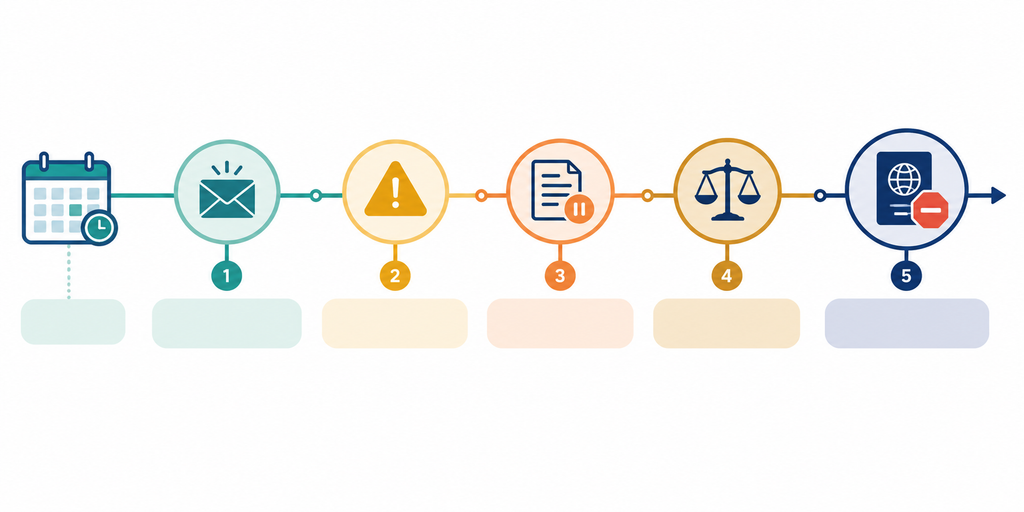
Ministerial Resolution No. 340 of 2026 tightened the Wage Protection System. The key points for employers:
- Salary due date: wages must be paid by the 1st of the following month. June wages are due by 1 July.
- Old rule: employers used to have until about the 15th. That buffer is much shorter now.
- Compliance threshold: at least 85% of wages paid on time (up from 80%).
- Escalation: law firms tracking the resolution report warnings from day 2 of a delay, work permit suspensions from around day 5, wider administrative measures from around day 11, automatic labour dispute triggers from around day 16, and travel bans or prosecution referral by day 21.
- All wages through WPS, with proof of payment submitted to the Ministry.
Why this matters for your choice: a late payroll run used to be an annoyance. Now it can freeze your ability to get new work permits.
- EOR: WPS is the EOR’s responsibility. A missed date hits their licence first.
- PEO: payroll is run for you, but the WPS record sits on your establishment. A slip affects your permits.
4. What you actually pay the provider
Pricing models vary, so ask for these in writing:
- EOR: usually a monthly fee per employee on top of salary and statutory costs
- PEO: usually a monthly fee per employee or a percentage of payroll, plus set-up if any
Rule of thumb: EOR costs more per head, but you skip entity set-up, office lease and a PRO. PEO costs less per head, but only makes sense if you already carry those fixed costs.
Key Insights: What the Numbers Really Tell You
- The licence decides the model, cost only decides the timing. Most “PEO vs EOR” debates are really “do we have a UAE trade licence?” debates. If you don’t, the question is already answered.
- Neither model removes your costs. It moves who handles them. Gratuity, visas, insurance and salaries are owed either way. What changes is who calculates them, who pays upfront and who is liable if something goes wrong.
- Gratuity is the cost people forget. At a basic salary of AED 8,000, one employee leaving after 4 years triggers AED 22,400. After 8 years it is AED 52,000. A team of 20 builds a real liability, so ask how it is accrued.
- The 1 June 2026 WPS rules turned payroll timing into a permit risk. Salaries are due by the 1st of the following month. A late run can now lead to work permit suspensions within days, which stops your hiring, not just your payroll.
- The visa fee depends on the licence behind it. The MOHRE work permit fee ranges from AED 250 to 3,450 depending on the sponsor’s compliance category. With an EOR, you are borrowing their category. With a PEO, you are using your own.
- EOR costs more per head. PEO costs more upfront. An EOR charges a higher monthly fee but skips entity set-up, office lease and PRO costs. A PEO is cheaper per head but only works once you carry those fixed costs.
- This is not a one-way choice. Many firms start on an EOR, then register an entity and move to a PEO. Plan the transition early so contracts, visas and service history carry over cleanly.
Which One Do You Need? A Simple Decision Flow
Answer these in order. Stop at the first result.
Question 1: Do you have an active UAE trade licence?
- No → Go to Question 3
- Yes → Go to Question 2
Question 2: Is HR admin (payroll, contracts, WPS, gratuity) slowing you down?
- Yes → PEO. Keep control of your team, hand off the admin.
- No, I have an HR team that works → You may not need either yet. A PRO services partner for visas and government paperwork may be enough.
Question 3: Do you plan to set up a UAE company in the next 6 to 12 months?
- Yes → EOR now, PEO later. Start hiring today, then transition once your licence is live.
- No / not sure → Go to Question 4
Question 4: Is the work project-based, or are you testing the market?
- Yes → EOR. Contained cost, no long-term commitment.
- No, I want a permanent team without a local company → EOR. It works long term too, and scales with headcount.
Question 5 (for either path): Do you need bulk or short-term workers rather than salaried staff?
- Yes → Look at On-Demand Labour Solutions instead.
- Need help finding the people first? → Recruitment Process Outsourcing.
PEO later
may be enough
Quick scenarios
Scenario 1: UK logistics firm, 3 project managers, 6 months. No UAE entity, fixed project. EOR. Team starts working without a licence, and the cost ends with the project.
Scenario 2: Dubai trading company, 40 staff, HR run by one overworked admin. Licensed, growing, payroll errors creeping in. PEO. Payroll, WPS and gratuity move to specialists, and the owner keeps control.
Scenario 3: SaaS startup from India, first 5 UAE sales hires, licence planned for next year. EOR now, PEO later. Hire immediately, then transition staff to your own entity.
Scenario 4: Hospitality group, 150 staff, seasonal peaks. Core team on PEO. Peak-season support through On-Demand Labour Solutions.
Common Mistakes to Avoid
1. Choosing a PEO without a trade licence
- Why it’s bad: A PEO can’t sponsor visas for a company that isn’t licensed in the UAE.
- Fix: No licence yet? Start with an EOR.
2. Ignoring the new WPS deadline
- Why it’s bad: Late salaries can now trigger permit suspensions within days.
- Fix: Ask your provider how they guarantee payroll runs before the 1st, and what happens if funds arrive late.
3. Forgetting gratuity until someone resigns
- Why it’s bad: It’s a legal liability that grows every year, and it surprises finance teams.
- Fix: Accrue monthly. Confirm how your provider handles it.
4. Treating all visa quotes as equal
- Why it’s bad: Some quotes exclude medical insurance or the employment guarantee.
- Fix: Ask for an all-in, line-by-line quote.
5. Overlooking Emiratisation
- Why it’s bad: Companies above certain headcounts have targets to meet.
- Fix: Read our guide on Emiratisation rules in the UAE and ask providers how they support it.
How to Choose a Provider
Before you sign, ask:
- Is the provider licensed in the UAE and MOHRE-compliant?
- Who is accountable for WPS if a payment is late?
- Is gratuity accrued monthly or billed at exit?
- What’s included in the visa quote? Medical insurance? Guarantee?
- Can you move from EOR to PEO later without re-hiring everyone?
- Do they have experience in your sector?
For more on hiring without a local company, read How to Hire Employees in Dubai Without Setting Up a Company. If you’re weighing PEO benefits in detail, see Benefits of Using a PEO in Dubai. Hiring pain points? Our article on top hiring challenges in Dubai covers the common ones.
Why Ontime?
- 25+ years of UAE workforce experience (from EOR page)
- 900+ clients served and 160,000+ professionals deployed (from EOR page)
- Full MOHRE compliance since 2011 (from PEO page)
- 3 offices in Dubai: Dubai Investment Park, Garhoud, JAFZA
- One partner for EOR, PEO, PRO, RPO and on-demand labour, so you can switch models as you grow
Key Takeaways
- No UAE trade licence? Choose an EOR. It is the only model that can legally employ people for you.
- Already licensed and drowning in HR admin? Choose a PEO. You keep control, they handle payroll, WPS and gratuity admin.
- Planning to set up a company within a year? Start with an EOR, then move to a PEO.
- Budget beyond salary: gratuity (21 days of basic pay per year for the first 5 years), visa costs (roughly AED 5,000 to 10,000 per hire depending on route), and mandatory health insurance.
- Payroll deadlines are stricter now: wages are due by the 1st of the following month under WPS, with faster escalation for delays.
- Ask every provider three things: Who is liable if WPS is late? Is gratuity accrued monthly or billed at exit? What is in the visa quote, line by line?
- Not sure? A 10-minute conversation about your headcount, timeline and licence status is usually enough to pick the right model.
Frequently Asked Questions
What is the main difference between PEO and EOR in Dubai?
An EOR becomes the legal employer of your staff, so you don’t need a UAE company. A PEO co-employs staff alongside your existing licensed company. The deciding factor is whether you already hold a UAE trade licence. No licence means EOR. Licensed business means PEO.
Can I use a PEO without a UAE trade licence?
No. A PEO works with an existing UAE entity that can sponsor employees through MOHRE. If you don’t have a trade licence yet, an Employer of Record is the right route. You can move to a PEO later, once your own company is registered.
Who pays end-of-service gratuity under an EOR or PEO?
Gratuity is a cost of employment, so it’s always passed on to you in some form. With an EOR, it’s usually accrued in your monthly invoice. With a PEO, it stays your company’s liability and the PEO calculates and administers it. Ask providers how they bill it.
How much does it cost to sponsor an employee visa in Dubai in 2026?
Most employers should budget roughly AED 5,000 to 7,500 per mainland hire, and AED 3,500 to 6,500 in many free zones. Quotes that include the employment insurance guarantee can reach about AED 10,000. Health insurance is an extra yearly cost. Confirm current fees before budgeting.
What are the new WPS rules in 2026?
Since 1 June 2026, private-sector wages must be paid by the 1st of the following month through WPS. The compliance threshold rose from 80% to 85%. Delays trigger a faster escalation, starting with warnings and work permit suspensions, and ending in travel bans or prosecution referral.
Can I switch from EOR to PEO later?
Yes. Many companies start with an EOR to hire fast, then register a UAE entity and move staff to a PEO model. Plan the transition early. Employment contracts, visas and gratuity service history need to be handled carefully so employees don’t lose continuity.
Is EOR only for short-term hires?
No. EOR works for one-off projects and long-term teams. Some companies keep staff on an EOR for years because it avoids entity costs. The decision is usually about cost over time. If your team grows large, owning an entity plus a PEO may become cheaper.
Is a PEO the same as a recruitment or manpower supply company?
No. A PEO manages HR, payroll and compliance for people you employ. A recruitment or manpower supply company finds and places workers. Ontime offers both, including Recruitment Process Outsourcing and On-Demand Labour Solutions.
Ready to Hire in Dubai the Right Way?
Not sure whether EOR or PEO fits? Tell us your headcount, timeline and whether you hold a UAE licence. We’ll recommend the model and give you an all-in cost, with no obligation.
Related Reading
- Employer of Record UAE: Complete Guide
- PEO Services UAE: Complete 2026 Guide
- Benefits of Using a PEO in Dubai
- How to Hire Employees in Dubai Without Setting Up a Company
- Emiratisation: Key Aspects and Rules
- Top Hiring Challenges in Dubai and How to Solve Them
- PRO Services in the UAE
Reviewed By:
Abdullah Bin Hussain
Executive Director — Ontime Manpower Supply
Flora Hospitality · Flora Realty · Oberon Mall | Pearl Investment LLC