
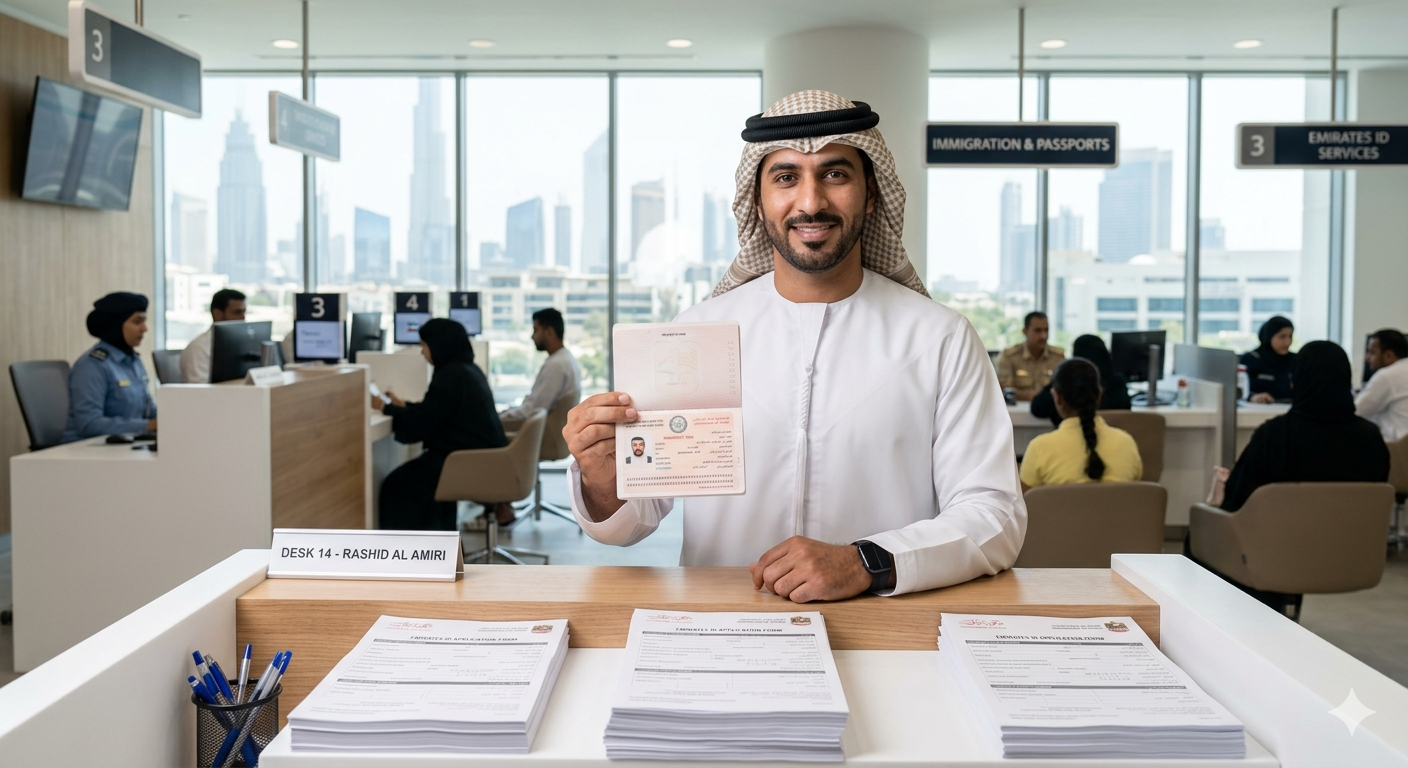
Working in the UAE legally requires the right visa. That sounds simple — but the UAE has multiple visa types for working professionals, and choosing or processing the wrong one leads to delays, extra costs, and in some cases, legal exposure.
This guide covers every major work-related visa type in the UAE in 2026, explains who each is for, what the application process looks like, and how employers and employees can navigate the system with confidence.
Quick Facts
- The UAE issues different visa types depending on role, income, sector, and sponsor type
- Most employees are sponsored by their employer via an employment visa
- The UAE Golden Visa offers long-term residency for highly skilled professionals and investors
- Freelancers can apply for a freelance permit and self-sponsor
- UAE employment visas are typically valid for 2 years and renewable
How the UAE Work Visa System Works
All work in the UAE requires legal authorization. This comes in one of two forms:
- Employment Visa — Issued by an employer who sponsors the employee. The employer’s trade license must be active and they must have the visa quota allocation available.
- Self-Sponsored/Freelance Permit — For individuals who work independently without a traditional employer sponsor.
The Ministry of Human Resources and Emiratisation (MOHRE) oversees employment visas on the mainland. Free zone authorities manage visas for employees working within their respective zones. The Federal Authority for Identity, Citizenship, Customs & Port Security (ICP) handles residency stamping.
Most employment visas in the UAE consist of:
- An entry permit (initial visa allowing you to enter the UAE)
- A status change (from visitor/tourist to resident)
- Medical fitness test
- Emirates ID application
- Residency visa stamp in passport
Main Types of UAE Work Visas in 2026
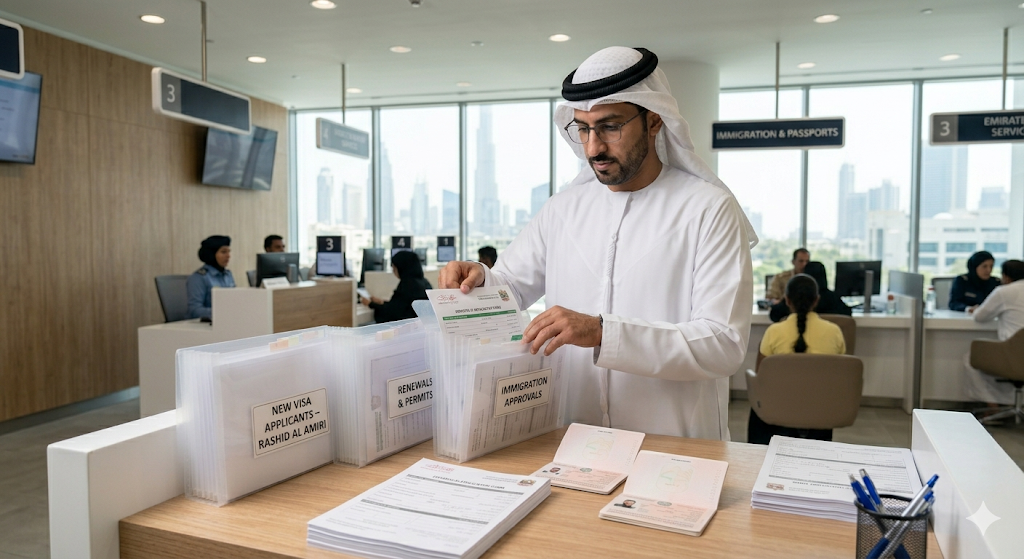
1. Standard Employment Visa (Employer-Sponsored)
This is the most common work visa in the UAE. Your UAE employer sponsors you, which means they are legally responsible for your presence and employment in the country.
Who it’s for: Any employee hired by a UAE-registered company on a full-time employment contract.
Key details:
- Validity: 2 years (renewable)
- Issued under the employer’s trade license
- Employer covers visa costs (required by UAE law)
- Employee must pass a medical fitness test
- Visa is tied to the employer — if you change jobs, visa must be cancelled and reissued
Process overview:
- Employer applies for entry permit via MOHRE/ICP
- Employee enters UAE on entry permit (or status-changed if already in UAE)
- Medical fitness test completed
- Emirates ID application submitted
- Residency visa stamped in passport
Typical cost to employer: AED 3,000 – 5,000 per employee (government fees + typing charges)
See how OnTime’s EOR services handle full employment visa processing for businesses in the UAE.
2. Free Zone Employment Visa
Employees working for companies licensed within UAE free zones are sponsored by the free zone authority rather than MOHRE.
Who it’s for: Employees of companies licensed in any UAE free zone (JAFZA, DMCC, DIFC, ADGM, Sharjah Airport Free Zone, etc.)
Key details:
- Validity: 2–3 years depending on free zone
- Processed through the relevant free zone authority
- Some free zones offer faster processing than mainland MOHRE
- Employee is restricted to working for the free zone company (unless they hold a dual license)
- Medical fitness and Emirates ID processes still apply
Note: Free zone employment visas cannot legally authorize work on the UAE mainland without additional approvals.
3. UAE Golden Visa (Long-Term Residency)
The UAE Golden Visa is a long-term residency permit — valid for 10 years — designed to attract talented, high-achieving, and high-value individuals to the UAE.
Who it’s for:
Investors (real estate AED 2 million+, or business investment)
Entrepreneurs
Specialized talent: doctors, engineers, scientists, programmers, artists
Outstanding students (GPA 3.75+ from accredited universities)
Humanitarian pioneers
Professionals with a minimum monthly salary of AED 30,000 in certain specialty fields
Key details:
Validity: 10 years (renewable)
Self-sponsored — not tied to an employer
Can sponsor family members
No need for a UAE sponsor or employer
Can stay outside the UAE for more than 6 months without visa lapsing (unlike standard visas)
Why it matters for professionals:
If you’re a senior professional in the UAE earning above AED 30,000/month in a qualifying field, applying for the Golden Visa gives you career independence — you’re no longer tied to a single employer for your residency status.
For a more comprehensive understanding, you can read the complete UAE Golden Visa guide for employers here:
https://ontimeuae.com/golden-visa-uae-for-employers/
You can also explore OnTime’s PRO services for support with Golden Visa applications and government document processing.
4. UAE Green Visa (Skilled Professionals and Freelancers)
Introduced in 2022, the Green Visa is a 5-year self-sponsored residency for skilled professionals and freelancers.
Who it’s for:
- Skilled employees with a minimum salary of AED 15,000/month and holding a bachelor’s degree or equivalent
- Freelancers and self-employed individuals with an annual income of AED 360,000+ and a freelance permit
Key details:
- Validity: 5 years
- Self-sponsored — not employer-dependent
- Can sponsor immediate family
- 6-month grace period if employment ends (vs 30 days on standard employment visa)
- More flexible than standard employment visa
For employers: Employees on Green Visas are easier to retain through employment transitions because their residency isn’t tied to your company’s license.
5. Investor Visa (Business Owner Visa)
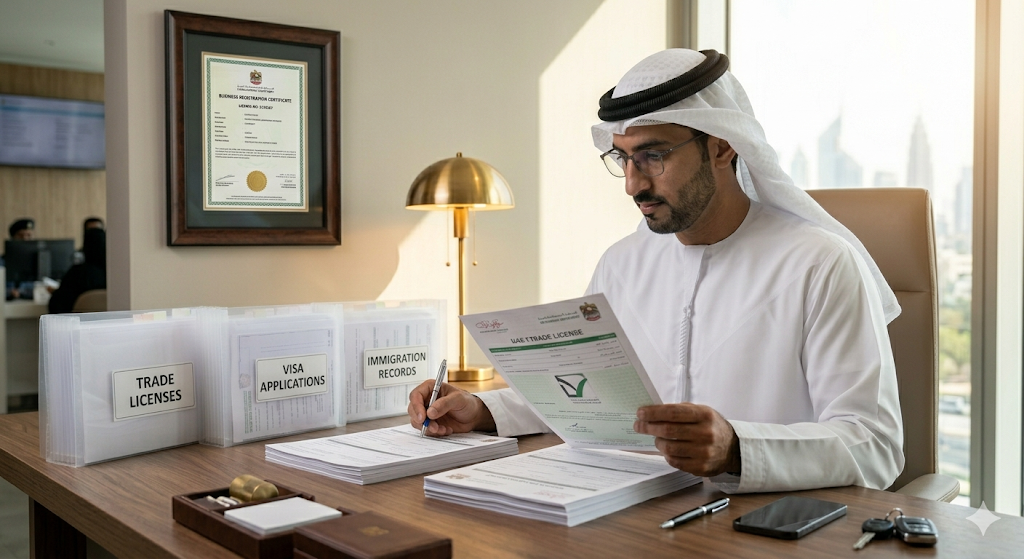
Business owners and investors who establish a company in the UAE can apply for an investor visa under their own trade license.
Who it’s for:
- Business owners with a UAE trade license
- Company shareholders with ownership documented in the MoA
Key details:
- Validity: 2–3 years typically
- The business must be active and the license valid
- Investor visas can sponsor employees and family members
- Separate from Golden Visa (which has higher thresholds)
6. Freelance Permit / Self-Employment Visa
Freelancers in the UAE can operate legally under a freelance permit issued by specific free zones or MOHRE.
Who it’s for:
- Independent consultants, writers, designers, photographers, IT professionals, educators
- Professionals offering services on a contract basis to multiple clients
Key details:
- Freelance permit issued by free zones (Fujairah Creative City, DMCC, Dubai Internet City, etc.) or MOHRE for certain categories
- Permit allows you to invoice clients legally without needing a full trade license
- Can be linked to a UAE residency visa
- Annual renewal required
- Costs vary: AED 7,500 – 25,000 depending on free zone and category
Important: UAE freelance permits typically restrict your activity to the category specified. Working outside your approved activity category creates legal risk.
7. Mission Visa / Project-Based Work Permit
For short-term workers entering the UAE on a specific project or contract basis, a Mission Visa allows work for up to 3 months.
Who it’s for:
- Specialists, consultants, or technicians brought in for a defined project
- Employees of foreign companies doing temporary work in UAE
Key details:
- Validity: 1–3 months
- Requires a UAE sponsor (a UAE company formally inviting the individual)
- Not suitable for ongoing employment — only temporary, defined engagements
Comparing UAE Work Visa Types at a Glance
| Visa Type | Duration | Sponsor | Ties to Employer | Best For |
|---|---|---|---|---|
| Standard Employment Visa | 2 years | Employer | Yes | All employed workers |
| Free Zone Employment Visa | 2–3 years | Free Zone | Yes | Free zone company employees |
| Golden Visa | 10 years | Self | No | Investors, top talent |
| Green Visa | 5 years | Self | No | Skilled professionals, freelancers |
| Investor Visa | 2–3 years | Self (company) | No | Business owners |
| Freelance Permit Visa | 1–2 years | Self/Free Zone | No | Independent freelancers |
| Mission Visa | 1–3 months | UAE Sponsor | Temporary | Short-term project workers |
Key Things Employers Must Know About UAE Work Visas

WPS and Payroll Compliance Employment visas are linked to WPS (Wage Protection System) compliance. If you fail to pay salaries on time via WPS, it can affect your ability to issue or renew work visas.
Visa Quota Allocation UAE employers must have sufficient visa quota under their trade license. The quota is determined by your office space and license type. Growing businesses often need to increase quota allocation as headcount grows.
Job Title on Visa Must Match Role The job title on an employee’s work permit must accurately reflect their actual role. Misrepresentation — putting a low-cost job title to reduce visa fees while the employee actually performs a higher-level role — is a compliance risk.
30-Day Grace Period for Standard Employment Visa Holders When a standard employment visa holder resigns or is terminated, they have 30 days to find a new sponsor, leave the UAE, or convert to a visit visa. Employers should manage offboarding processes around this timeline.
Notice Period and Visa Cancellation Visa cancellation should only be submitted after the employment relationship officially ends. Cancelling a visa while an employee is still under notice period creates problems.
OnTime’s on-demand labour solutions and EOR services include full visa management — removing this compliance burden from business owners entirely.
How to Apply for a UAE Work Visa: Step-by-Step

For Employer-Sponsored (Standard Employment Visa):
- Employer submits entry permit application via MOHRE or free zone portal
- ICP approves and issues entry permit (typically 3–7 business days)
- Employee enters UAE on entry permit or completes status change if already in UAE
- Medical fitness test at an approved health centre (results in 24–48 hours)
- Emirates ID biometrics appointment at ICP
- Residency visa stamped in passport (10–15 business days typically)
- Employee receives Emirates ID card (7–10 business days)
For Golden Visa:
- Check eligibility via ICP portal or through a PRO service
- Submit application with supporting documents (salary certificate, qualifications, employment contract)
- Application reviewed — timeline varies (2–8 weeks)
- Approval issued and residency visa stamped
- Emirates ID issued under 10-year residency
For Green Visa (Skilled Professional):
- Obtain an employment contract meeting salary threshold (AED 15,000+) with a bachelor’s degree attestation
- Apply via ICP portal
- Entry permit issued
- Complete medical + biometrics
- Residency stamp and Emirates ID issued
OnTime’s PRO services support the full end-to-end UAE visa process — from application submission to Emirates ID collection.
Frequently Asked Questions
Q: Can I work in the UAE on a tourist or visit visa?
A: No. Working in the UAE on a visit or tourist visa is illegal and can result in deportation, a UAE entry ban, and fines for the employer. You must hold a valid work permit or employment visa before commencing work.
Q: How long does it take to get a UAE work visa in 2026?
A: For a standard employer-sponsored employment visa, the full process from entry permit application to Emirates ID typically takes 3–6 weeks. Free zone visas may be slightly faster. Mission visas can sometimes be processed in 5–10 business days.
Q: Can I change jobs in the UAE without losing my visa?
A: Yes — UAE labor law was updated in 2022 to allow employees to transfer employers without the old “no objection certificate” requirement, subject to completing their probation or notice period. Your new employer issues a new work permit and your old visa is cancelled upon transfer.
Q: What happens to my visa if I resign or am made redundant?
A: On a standard employment visa, you have 30 days after visa cancellation to either find a new sponsor, switch to a visit visa, or leave the UAE. Golden and Green visa holders are not affected by employment changes.
Q: Can I sponsor my family on a UAE employment visa?
A: Yes, if your salary meets the minimum threshold (typically AED 4,000/month, though many landlords and schools require AED 10,000+). You can sponsor a spouse, children under 18, and in some cases parents and adult children.
Conclusion
UAE work visas are not a one-size-fits-all system. The right visa for a standard employee, a senior executive, a freelancer, and a business owner are completely different — and the consequences of getting it wrong range from administrative headaches to legal liability.
For businesses hiring in the UAE, the smartest approach is working with a partner who handles visa processing end-to-end. Not just to save time, but to ensure every step meets current MOHRE and ICP requirements.
For professionals, understanding your visa options — especially the Green Visa and Golden Visa routes — gives you career flexibility and residency security that standard employment visas don’t offer.
Need help with UAE work visas or employment compliance?
Speak to the OnTime team — or learn how OnTime’s EOR and PRO services take UAE visa management completely off your plate.
Also explore: OnTime’s complete workforce solutions — from executive hiring and on-demand labour to EOR and Emiratisation support.
Reviewed By:
Ambili Arun Kumar
Head of Sales — Blue, Grey & White Collar Manpower
18+ Years in UAE | 14+ Years in Manpower Outsourcing | Dubai, UAE